In 1981 the inaugural MTV music video was Video Killed the Radio Star; Today social media videos are similarly changing podcast economics
Then and now, it was about media economics. History has shown us how radio, a favorite medium of mine since I was a kid in a remote rural town, lost much of its ad dominance to television, and then further to cable TV.
Then came podcasts. To me they were a revelation! They were radio, but with topics scaled across what felt like an infinitely long tail — far more variety and specificity than broadcast or cable bandwidths could ever deliver.
And, Bonus! They were on demand, so I could listen on my terms!
Back in its infancy, podcasting was like radio. Specifically college radio, in that there was zero money in it.
I mused on this very site, 20 years ago, how podcasts might change that. I even predicted in Monetizing podcasts that we could have ad buys and sponsorships as the drivers of its business model. Of course what I couldn’t predict back in 2006 was socially-distributed videos and clips — which have knocked out of our ears the voices of, to name three, Dana Stevens, Stephen Metcalf, and Mike Pesca.
Below you’ll learn from Mike why his voice, and possibly others, are no longer in our podcast feeds. You’ll also get a prediction for how video podcasts may themselves be facing a pivot, postulated by Ryan Broderick, the man behind the excellent Garbage Day newsletter.
Podcast promotional clips eat their masters
July of this year was not a happy time for me in terms of my media diet. First, Slate Culture Gabfest shut down after 18 years. And after 16 years, Mike Pesca’s The Gist met the same fate. Although I haven’t learned a reason for why the former podcast folded, Pesca was forthcoming about his, in a conversation about current podcast economics. The TL;DR in one word: Algorithms:
The co-host of Scott Galloway’s Prof G podcast, [Ed Elson], put out a social media clip, saying “Our clips are not only much more seen than the show. They’ve essentially become the show, when people think about who’s Scott Galloway and me, the sidekick. They only think about the clips on social media.”
So [the business model] has become inverted. Rather than having promotional materials for the show, the show becomes in service of these promotional materials. It is solely a vehicle to cut social media clips. [Ed was saying the clips were also] a major if not main way that the show made money: The promotional material about the show. And … if I started to do these social media clips, which I tried, and if somehow I got good at it and I was making a ton of money at it, I might say all right, I’ll lean into that. But that was never the case.
One bright spot for me personally was that before The Gist shut down, I got my question answered on a long-standing segment of the show, called Is That Bullsh*t? You can listen to the 14-minute excerpt below:
Is This Current Pivot To Video Finally Ending?
That was a subheading in a recent Garbage Day newsletter. Ryan Broderick gives his reasoning for why he thinks the answer is Yes:
YouTube has drastically changed what their front-facing metrics track — but not what they pay for you! Basically, opening a YouTube video now counts as a view, even though they’re still only paying you for “engaged views.”
MS Now will soon be airing Crooked Media “podcasts,” which are really just talk shows. YouTube channels are simulcasting on Netflix.
And I’m hearing from a lot of short-form creators lately that that entire realm is basically over if you want to make any real money.
“As for what’s next, my prediction is a complete hollowing out of the video middle class, as it were. Professionally produced studio shows and random people talking into their phones and basically nothing in between.”
Time will tell. If it does, maybe on-demand audio, the “theater of the mind,” will experience an economic resurgence.
A spooky tale about a dead metric rising from the grave to take over the world
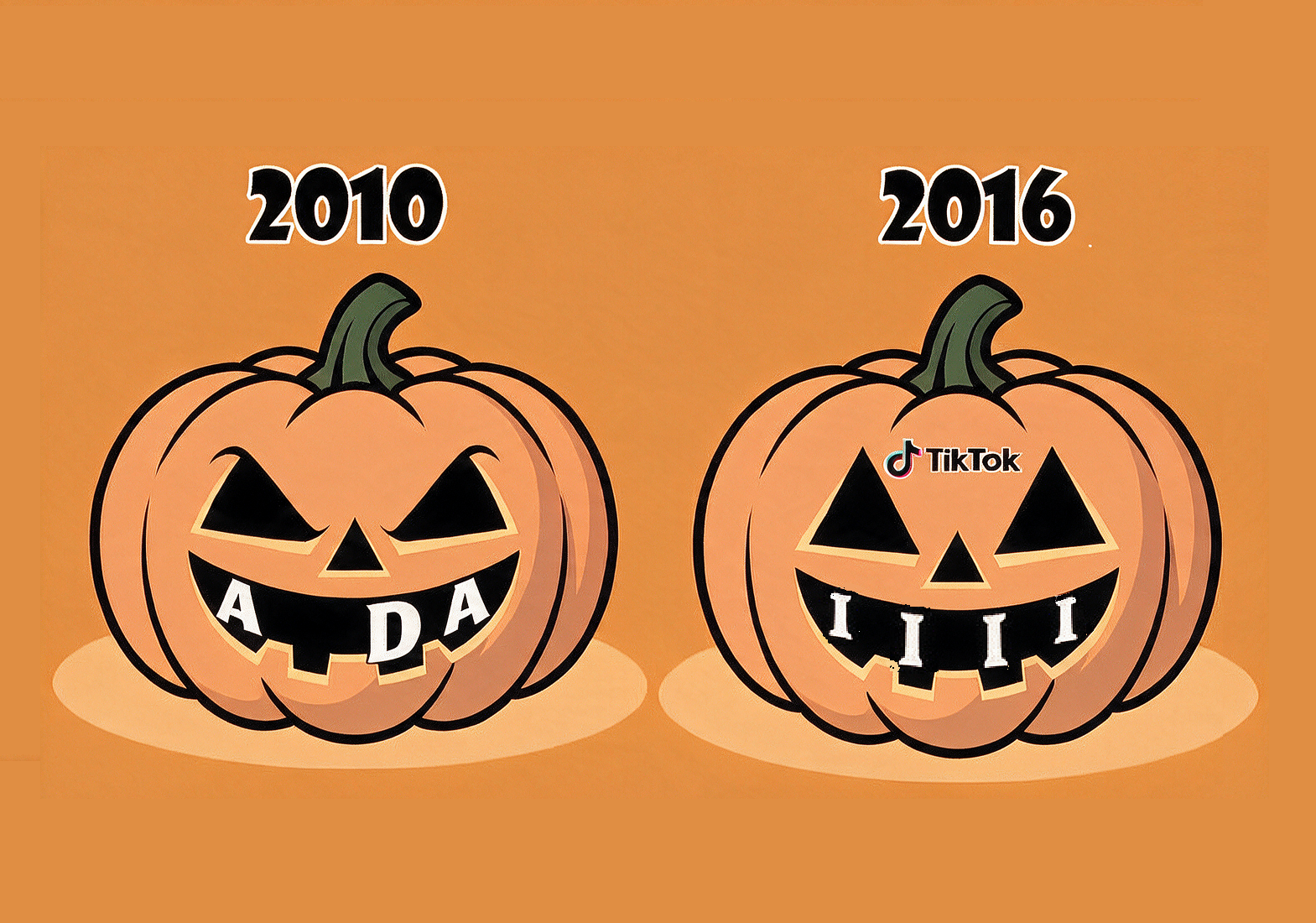
This 2010 blog post of mine, Content Interest Index is the “missing link” in web analytics, outlined a novel metric that fills a measurement gap in a sales journey. Six years later, TikTok was launched with an algorithm that preforms precisely this measurement. And does it brilliantly. Here’s the story of my quest, and what it teaches us about finding and filling innovation gaps.
I outlined the business case in an earlier post. It described why Content Interest Index (CII) needed to be invented:
The first marketing class I ever had in college taught me the AIDA model of advertising. It’s still used today, lo these many years later. The AIDA model goes like this: [To make a sale,] once you attract Attention, you must generate Interest, create Desire, and enable your market to take Action. Do all of those things and you’re golden.
Back then the only way you could actually measure any of these (except for the last A, which was making a sale) was by employing expensive and time-consuming research. The web changed all that. It allows us to measure each of these steps — except for that pesky thing called Interest.
When I posted that I was leading a team of web developers. Using Google Analytics 1.0, I added client-side instrumentation to measure proxies for the interest levels of visitors in the pages of a financial institution’s website. Those proxies included how many people shared a page, bookmarked it (a thing back then), or sent it to PDF for printing.
With those behavioral proxies we hoped to calculate the comparative “interestingness” of this client’s content. Unfortunately our contract expired and I was never able to analyze the results and calculate the likelihood of CII to predict entering a conversion funnel (Desire) and achieving an online conversation (Action).
I soon moved on from that agency, and also concluded the client-side instrumentation available at the time would never provide enough of a signal to be useful. I considered CII a dead metric.
Then came TikTok.
The breakthrough of ByteDance was using newer, real-time technology to create an app that leveraged its own proxies for interest, and prioritized them in a scoring model that could revise itself in milliseconds.
According to this Wall Street Journal investigation into TikTok’s secret — and extremely addictive — algorithm, the app prioritizes engagement signals including likes, follows, and watch time. Most notably, “We found that TikTok only needs one of these to figure you out: How long you linger over a piece of content.”
They found what many of us have experienced firsthand: Within minutes of lingering even slightly longer on a particular video type, TikTok adjusts your feed to show more similar content.
This methodology became a blueprint. Meta adopted similar interest-duration models, and within years, interest measurement became the industry standard. In January, TikTok formalized its U.S. operations with an investment group, valuing the platform at approximately $14B USD, a vindication of the algorithm’s effectiveness.
The Takeaway for You: The AIDA model had a digital analytics blind spot, and for years, we couldn’t find a way to fill it. Rather than accepting that limitation, I tried to bridge the gap.
You likely face similar blind spots in your current behavioral analytics work: metrics you can’t measure, customer signals you can’t track, or questions your tools can’t answer. That gap is where innovation lives. When you find it — and have the persistence to investigate — you may be creating the next industry-standard metric.
In her most recent special, stand-up comic Isabel Hagen talked about hating what she calls nonconsensual magic tricks. While a clerk was giving her change, he pulled a quarter out of her ear. She explained, “You gotta ask first, ‘Do ya wanna see a magic trick?’ Otherwise, it’s just deceit.” I worked in technology during the bursting of the dot-com bubble in the year 2000, and I can speak with firsthand knowledge about the similarities of that bubble and what we’re seeing today. But so what? It’s a claim any technologist might make who is old enough to remember the original Charlie’s Angels.
There’s something more unusual that qualifies me to play Cassandra here. An earlier career had trained me in the psychology of deceit. I learned a mental Jiu Jitsu that can also be used to sustain bubbles.
That first career started when I was 12, the year I was “discovered” while performing magic tricks in the basement of my hometown’s public library. I had been studying magic and building a rudimentary act for a year or so. This was my first show to kids I did not know. It went well, and although I couldn’t articulate it at the time, what most drew me to magic was the psychological principles that make it possible.
Here’s a simple example: I learned early that adults were much easier to fool than children. And paradoxically, the more intelligent an adult was, the easier still. I’ll explain why later.
When I say I was discovered, I’m not kidding. My hometown children’s librarian happened to be a dear friend of a touring, highly respected magician, one who was in town between gigs. He was standing in the back and afterward pulled me aside to ask how serious I was about magic. Dumb question! It was an obsession. That was the beginning of a decade-long apprenticeship, and my first career: Fooling people for fun (theirs and mine) and profit.
AI itself is no illusion
Let me be clear: I think AI is miraculous. Especially for marketing technologists like me. Just as the internet and the world-wide-web have proven to be of sustained, world-changing value, AI is the same. The difference? AI is more consequential than the internet by at least one order of magnitude, and probably several.
I love AI. But I’m terrified by the warning signs I’m seeing, and feeling twinges of a quarter-century-old PTSD.
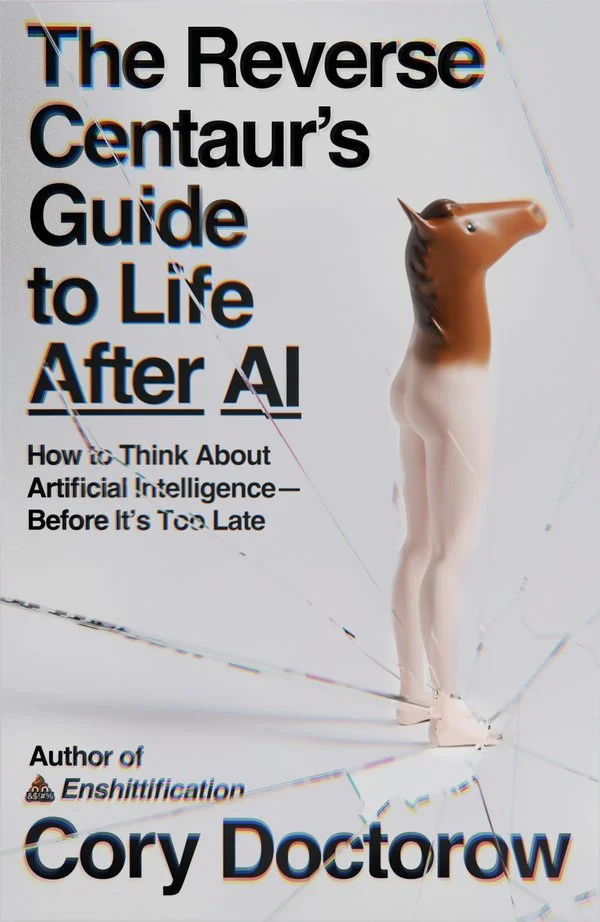
Doctorow explains that growth stocks are valued quite differently than mature ones. It’s this difference that has triggered this particular technology bubble.
Historically, Meta, Amazon and Google (Alphabet) stocks have had much higher values compared to mature stocks like Johnson and Johnson, Walmart, and Procter and Gamble. The higher values compared to present earnings reflect the fact that investors are betting that there are still many large and lucrative bites to be taken out of growth stock apples … before nature takes its course and the companies mature, at which point earnings still grow but at a lower, steadier rate.
Companies, like humans, yearn to appear younger
Meta, Amazon and Google have really enjoyed being growth stocks. As Doctorow explains, “When a company has a solid growth stock, other people want that stock. The company can use its stock to buy stuff, like other companies. Key personnel can be hired at whopping compensation rates, with the majority of that compensation coming in stock.”
The problem is these three stocks and many others are getting a little long in the tooth.
They’ve recently sought something to help them resume rapid revenue growth. That’s why, for maturing stocks, going all-in on AI was a no-brainer. If their investments in AI work out, everyone wins. Including you and your growing retirement stock portfolio.
You may have noticed, however, that things aren’t going swimmingly.
Here’s one example: To quote Aswath Damodaran, of Stern School of Business at NYU and a guest on an episode of Prof G Markets podcast, called Big Tech Has No Idea How AI Pays Off, “When I was looking at the prospectus of SpaceX [the home of xAI and Grok], I noticed that they were making more money by leasing out their data centers to others — in this case, Anthropic — than they were making from AI. I thought that was seriously at odds with their AI story. They were telling, in the prospectus, of this huge market, $28 trillion. [Now they reveal they are] making more money by selling into the AI architecture space.
“It’s very revealing. It tells me that you are not as confident as you claim to be … If you were really confident that there was going to be a huge market you wouldn’t want to lease the space out to potential competitors.”
From compute supply shortages to a demand crisis
Co-host Scott Galloway added it’s the same story from Meta. “Both Musk and Zuckerberg are trying to spin it as, ‘Look at the premium we’re getting for the infrastructure we’ve built!’ What I see in that is that the AI demand curve has been vastly overestimated. And now you have, essentially, hundreds of billions, if not trillions, of dollars in [capital investments], all going to only two sources of demand creation, OpenAI and Anthropic. It feels like we have all of a sudden pivoted from a supply crisis [because of a shortage of compute from data centers] to potentially a demand crisis.”
How downright bubblicious.
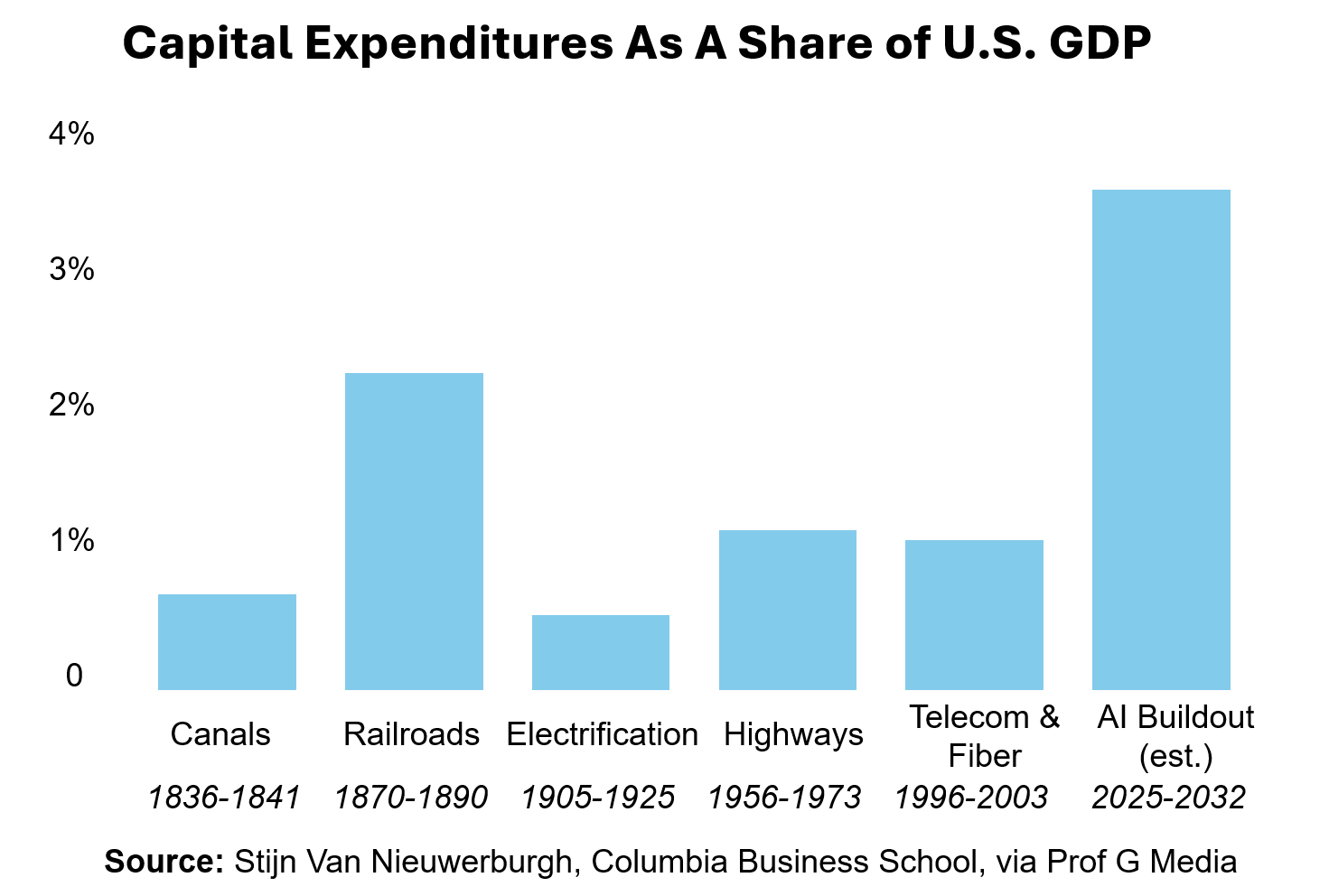
The chart below shows a uniquely high level of capital investments (capex). This money is in service of basically just two companies addressing all AI demand, OpenAI and Anthropic … which are, by the way, both hemorrhaging cash.
Look at the height of that far right bar in the chart, which compares the capex contributions to the U.S. gross domestic product (GDP) during various technology transformation spurts. Our country’s current annualized GDP is just 1.5 percent.
The takeaway: While these percentages should not be combined, it’s hard not to see that if there was no investment in AI infrastructure, we would likely be in a pretty nasty recession.
What about the AI job apocalypse?
It’s worth noting here that Professor Galloway believes, along with Doctorow and others, that the catastrophizing about an “AI job apocalypse” is actually, “fundraising and techno-narcissism.” What, you ask? Fundraising? Yes. It turns out when you wave under the noses of CEOs confident assurances that thousands of their employees can be replaced by AI, few can resist.
I’ve linked to the full YouTube recording of the podcast and I recommend you check it out. Damodaran and the hosts discuss other signals that reality isn’t living up to the AI hype. And when I say AI hype, I mean AI stock value hype.
Just as the dot-com surge a quarter century ago was not built on a lie, and spawned the very Metas, Amazons and Googles we’ve come to profit from as they’ve fattened our 401(k)s and investment portfolios, AI itself will change the world.
But AI-related stock values today appear to be mathematically untenable.
Two things you can do right now
Your savings — I’m not a financial advisor, and the strategy you take to protect your retirement savings to the greatest extent is something you should discuss with one. Keep in mind that if you are younger, you might just hold tight with your existing savings strategy. Why? It took only seven years for the S&P 500 to return to pre-bubble values.
Your career — Knowledge is power. If you want to learn more about the AI-enabled growth of reverse centaur jobs, this companion to Doctorow’s book is excellent. Also published this year, it’s by award-winning Financial Times journalist Sarah O’Connor. The title: We Are Not Machines: The Fight for the Future of Work.
Nothing up my sleeve! Four trickster secrets revealed
So how do you, if you’re in the business of growing already overvalued stocks, keep alive the illusion … the promise of future riches? The key word is illusion. Below I list methods I first learned when my voice was still changing.
Tactic #1: The Byzantine premium
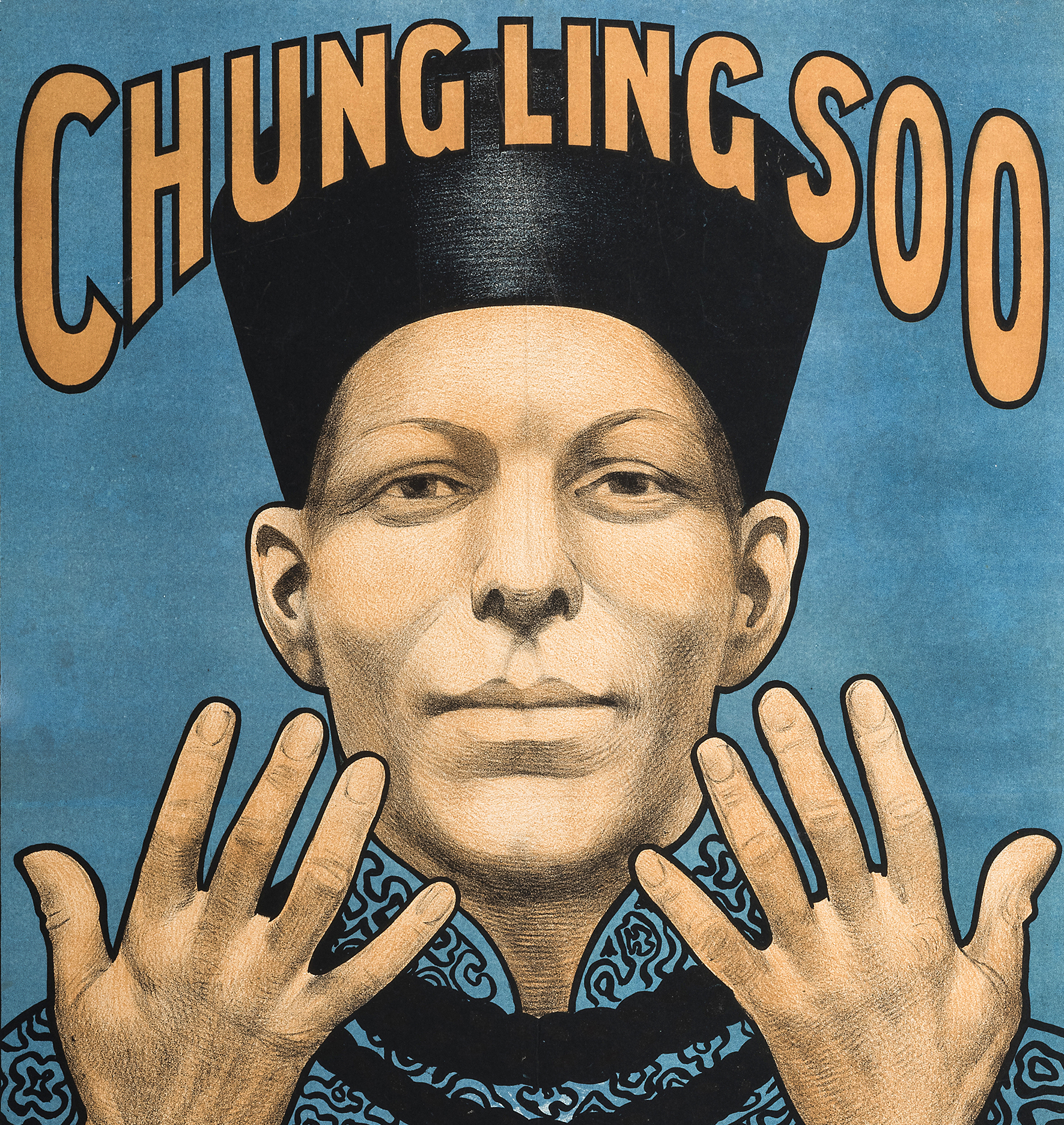
In my childhood studies I learned that around the turn of the last century, stage magicians would roll out complicated and exotically decorated props from “The Orient.” To Western audiences of the time, things from Asia were considered mysterious and prone to magical properties. One notable American magician, William Ellsworth Robinson, went so far as to perform in elaborate make-up, under the stage name of Chung Ling Soo. A portion of a poster promoting his show adorns this blog post.
He guarded this ruse of being Asian as tightly as if his career depended on it. It probably did. Appearing inscrutable made his tricks more convincing.
Fast-forward to today. Cory Doctorow explains, “Tech bubbles are surprisingly easy to generate, thanks to something economists call ‘the Byzantine premium.’ That’s the extra value that investors place on an asset that they don’t understand.” That is as true today as it was in the year 2000.
He goes on, “They assume that any pile of shit of sufficient size must have a pony under it somewhere.”
Tactic #2: Pleasant surprises deliver dopamine hits
The performances of comic Isabel Hagen and those of magicians have something in common: A series of delightful surprises. What we’re feeling when we experience them is literally visceral. It’s the release of dopamine, the pleasure hormone.
Now picture yourself in a boardroom, seeing a live demonstration of AI that a company wants to sell to your enterprise. Super impressive! Then imagine each of these same board members going home and playing with a chatbot.
As I described in this post on my personal blog, Reading and Writing in the Age of AI, “The intelligence we confer to the text coming out of chatbots is an illusion. … Like a magic show. At a Penn and Teller performance, the magic doesn’t occur onstage. The illusion takes place in our minds, as the duo crafts situations where our assumptions and biases fill in perceptual blind spots, and we consequently ‘see’ the impossible.”
The response from the board members, who have had their beachheads sufficiently softened by these repeated dopamine hits? “Get out our checkbook!”
Tactic #3: Cognitive biases can influence us and we don’t even realize it
I’ve spent the most recent part of my marketing technology career overseeing testing and personalization systems, specifically for selling to consumers. As I mention in this five-minute YouTube excerpt of a talk I gave in 2018, to an Adobe Summit audience in Las Vegas, hidden but measurable psychological quirks, such as confirmation bias and loss aversion, turbocharge those personalization tools. (And, incidentally, serve as fuel for magic tricks.)
Yet I warn my audience that the people operating personalization systems can be just as susceptible to biases as the consumers they sell to. They can fool themselves and not even realize it, ruining the results of their controlled randomized tests.
In a similar way, I am not saying that those in the AI Value Hype Industrial Complex are conscious of their biases toward AI as an Enterprise Money Printing Press. They may be true believers. What’s more, as Upton Sinclair famously wrote, “It is difficult to get a man to understand something when his salary depends upon his not understanding it.”
Tactic #4: Build hidden compartments
This isn’t so much a subtle psychological tactic as naked deception. But you cannot argue with success. There is nothing in stage magic more tried-and-true than hidden compartments. We’ve all seen exposés revealing that the assistant was hidden in that fancy box the whole time.
Now imagine the box is a corporate balance sheet, and the hidden assistant is a monster.
Major hyperscalers are building financial artifices, to the alarm of respected authorities like Ed Zitron. It’s true that many started by relying purely on debt they disclosed on their balance sheets. Yet today, as costs skyrocket, much of hyperscaler capital is externally financed, hiding considerable financial risk. A popular way is something called a special purpose vehicle (SPV).
To quote Zitron: “The problem with these SPV-based deals is that they allow companies to, at least on a balance sheet, hide the scale of their debts. … This is all legal, worrying, and yes, a little bit Enron.”
Similar to how collateralized debt obligations (CDOs), which caused the Great Recession of 2008, were eventually regulated, someday so will SPVs. Someday. But like CDOs, I’m convinced that regulation won’t happen until the damage to our world economy is done.
If you want to vanish an elephant, do it in front of a Mensa chapter
I promised to explain why highly intelligent adults are easier to fool than those with average IQs, and why both are easier to fool than children.
Younger brains are still being wired. That means they see the world much less predisposed to assumptions than you or me. On the other end of the spectrum, the most intelligent adults got that way by considering certain observations as settled law. They’re called heuristics: That glass salt shaker is full of salt, not painted to look that way. That single playing card is just that, not hiding another card flush against it.
Some of the greatest intellects in the world have convinced themselves that the law of gravity behind meteoric stock gains has been rescinded this time, ignoring history. It’s a truism that goes all the way back to the Dutch tulip bubble, in the 1630s.
They all fell victim to nonconsensual magic tricks.
Early in the 18th century, an English poet wrote advice on how to tactfully correct someone. It still holds up today.
Men should be taught As if you taught them not With things unknown Proposed as things forgot
— Alexander Pope
I was reminded of this wisdom when I was renting a film on YouTube. It was brilliantly optimized to suggest something, as if I had forgotten, to start the rental period.
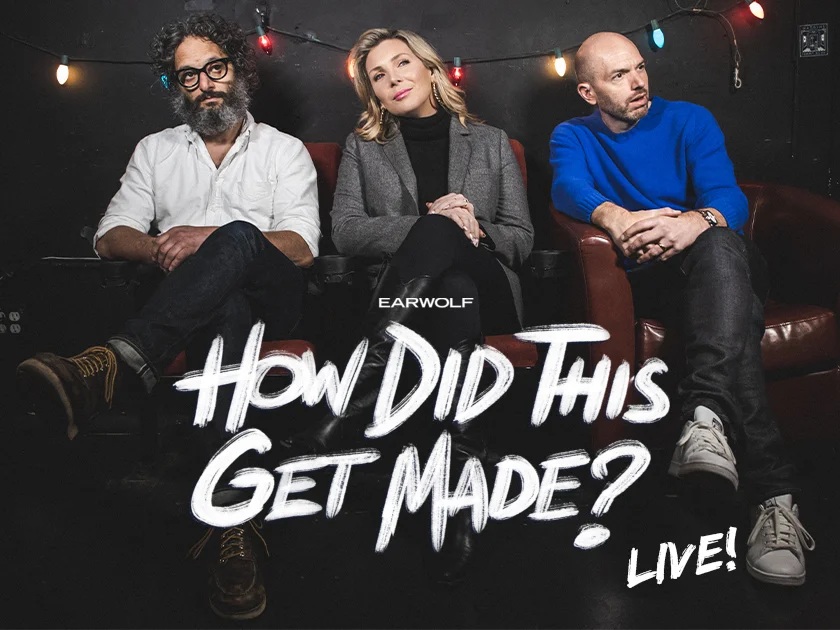
Don’t judge me harshly on my film choice, shown on the image below. This terrible action comedy from 2020 was an “assignment” as a loyal listener to the long-running podcast How Did This Get Made?, with improvisational actors Paul Scheer, Jason Mantzoukas and June Diane Raphael, most recently of Ellefame (she plays the mom). They roast bad movies.
I imagine that there were many A/B/n tests behind this final user experience, with the goal for optimization being what has to be the most costly part of renting steaming films: How do we reduce the number of complaints from users who don’t remember agreeing to our rental duration? I say there was much testing involved, because the solution is so elegant!
Netflix Sign-up Buttons
Another test from the world of streaming media is one I’ve included in an A/B testing and personalization quiz. The quiz helps me illustrate to my audiences why the cognitive biases we all possess necessitate scientific testing.
We cannot guess our way to the best user experiences!
It’s a cellphone-based quiz where folks are shown two or three options and they have to vote in real time which is the winner, based on randomized controlled experiments in platforms like Adobe’s Customer Journey Optimizer.
My quiz content is from the excellent GoodUI.org (subscription required).
I call the quiz How Good Is Your Gut? Of the hundreds who have participated in the quiz, no one has guessed correctly more than 50% the time, which is a great a way to demonstration how important testing is to optimize outcomes.
Feel free to take your best shot in the embedded quiz, from these three button options tested:
When you take the quiz, you’ll be shown the cumulative results from all of the times I’ve conducted it.
Netflix Test
Netflix ran a test on their sign-up button. Take a guess — which button size
improved clicks and sign-ups?
Here’s how everyone answered:
Small Button
Medium Button Correct Answer
Large Button
The next time you’re renting media and are impressed with the friction free experience (or not … I’m looking at you, Hulu!), remember there was a ton of behavioral science behind what you’re experiencing!
Every sale on your ecommerce site travels through four phases: Attention, Interest, Desire and Action (AIDA). Before AI, optimizing each meant months of randomized controlled tests, slow feedback loops, and lots of guesswork. AI compresses that personalization cycle dramatically. Marketers using it have a distinct competitive advantage
To explain how, I’m pulling from two creatures found in nature. They evolved over millennia to do exactly what your ecommerce experience needs. One of them might be the strangest and most instructive thing you’ve never heard of.
I described those two creatures recently on another blog site, Dyslexic Data. The title: Using data to visualize evolutionary forces. There I explained how the pair have evolved to catch and eat the optimal number of bugs, in a feat of natural selection that evolutionary biologists have visualized.
Although you should not expect either showing up in an upcoming Pixar feature, in my mind’s eye I do see them, above, fitting in nicely outside The Haunted Mansion. (I describe the significance of this Disneyland attraction in another post, also on Dyslexic Data).
First, the spider: A creature so reviled it even has a phobia named after it. I asked AI to make it look friendly. Still, all those legs! It’s hard to avoid the creep factor.
The other isn’t shown, because, 1.) It is genuinely hideous, and 2.) It spends its phase of life hiding in loose sand, at the bottom of funnel-shaped depressions like the three shown in the foreground.
This shy, larval stage of the lacewing, is called the ant lion.
Growing qualified visits by optimizing attention and interest
AI is rewriting the economics of all four phases of AIDA. The first two, before modern LLMs, were addressed by the human optimization of paid and organic search, as well as digital display ads. Algorithms helped, but decisions based on feedback loops were slow and data was thin.
You can think of this process, pre-AI, as similar to the silk spun by the very first ancestors of modern spiders. They weren’t very efficient.
The computer simulator described in my evolution blog post makes a case that natural selection and food scarcity inevitably drive generations of spiders to spin webs optimized for the lowest calorie expenditure yielding the greatest caloric intake. If you ran that NetSpinner simulation a thousand times, over multiple generations, each pass would iteratively, gradually evolve to what you see above: the classic Charlotte’s Web bug-catcher.
Every single time. Now that’s optimization!
Similarly, modern machine learning works to optimize your campaigns for better attraction of attention and generation of interest. Here are just three of the mechanisms:
It does a better job of stitching identities in your customer data platform (CDP)
It refines your organic and paid campaigns by providing more actionable data
It continually interprets that data to launch and test multiple ad variants
Those actions include look-alike modeling, to find more prospects similar to your best customers, and suppression models, to ensure you aren’t “wasting silk” — in this case, your ad dollars — on people who are already customers.
In these ways and the others below, AI compresses evolution by quickly learning the best placement of its own “sticky silk strands” to capture the attention and interest of ideal prospects.
From search rankings to AI recommendations: the new attention engine
Organic search marketing, also known as search engine optimization (SEO), is still important.
AI helps there too.
It can optimize your product description pages to rank higher in search engines for the phrases your customers use to find the products.
Rapidly emerging as a counterpart to SEO is agentic engine optimization (AEO … sometimes called GEO for “generative engine optimization”). AEO / GEO acknowledges that attention and interest take place in ways we marketers find difficult to quantify, in recommendations made by ChatGPT and other chatbots.
Agents such as Optimizely’s Opal can build the data schemas within your product description pages that are invisible to human visitors but instructive to bots.
Those schemas serve as training datasets for the LLMs. They help persuade chatbots to recommend your products over competitors when consulted by your prospects.
Measuring Success
Success metrics in a world of AEO / GEO can be tricky.
In the old world, interest was measured by the raw number of people who arrived at your site. Since the emergence of Google Gemini, ChatGPT and their ilk, marketers are noticing significantly fewer visitors. That’s because consideration for many is happening on search engine answer sections and the recommendations served up by the chatbots.
Here are two metrics that still work:
An increased return on ad spent (ROAS)
A reduced number of clicks leading to conversion, since people are generally arriving more knowledgeable about your offerings, with fewer questions
Boosting desire and action through optimized conversion funnels
I’ve known about ant lions since I was a morbid little boy. As a digital marketer, I recognized they’ve evolved to produce a literal, perfect conversion funnel.
The ant lion hangs out at the bottom. When it senses an ant has stumbled onto the rim, it flings its shovel-shaped head to toss grains of sand up and over.
The unwitting ant works against the avalanche as it begins a downward slide. The ant lion counters with more targeted shoveling. In stages, similar to the steps of conversion funnels that are your site’s shopping experiences, any slip-up would mean escape, and a ruined dinner.
The Action at the end of the Desire phase is, of course, a sale. Improving your conversion funnels to optimize sales, before AI, was slow and imperfect.
True, funnel-optimizing A/B and multivariate testing succeeded in the pre-AI world, by using complex math to measure improvements. But today, AI makes these calculations and decisions in an instant, based on more variables than you could ever hold in your mind (the segment of that prospect, the visit source, day and time, and purchase history, to name just a few attributes).
AI ensures that every method to reduce conversion funnel attrition is put to practice in real time. The result? A greater share of your prospects pass from Desire to Action.
Measuring Success
What metrics would tell you if your conversion funnels are performing like a well-dug ant lion trap? Here are two:
Conversion rate, as measured from sales divided by entries into the relevant product description page.
Shopping basket size, since AI can also supercharge your “You may also like” recommendations
Better webs, smarter funnels
AI doesn’t change what a sale is. It compresses the time it takes to get there … to serve up the right message and experience for the right person at every stage of the process.
Chances are some of your competitors are already using AI to spin better webs and dig more efficient funnels. The question isn’t whether to adopt AI. It’s which phase of your AIDA cycle you optimize first.